
Chiclayo & Lambayeque
Fotos que tirei nas cidades de Chiclayo e Lambayeque, no Peru.
Photos I took in at the cities of Chiclayo and Lambayeque, in Peru.
Chiclayo é uma cidade do norte do Peru que serve de ponto de partida para visitar-se diversos sítios arqueológicos da região, como Huaca Rajada de Sipán e as pirâmides de Túcume.
Chiclayo is a city in northern Peru that is a departure point to visit several archeological sites around the region, such as Huaca Rajada in Sipán and the pyramids of Túcume.

Chiclayo · Municipalidad

Chiclayo · Catedral · Cathedral
À esquerda, o prédio da prefeitura, de 1919; à direita, a catedral, do final do século XIX.
On the left, the city hall building, from 1919; om the right and below, the cathedral, from the late 19th century.

Chiclayo · Catedral · Cathedral

Chiclayo · Catedral · Cathedral
Próximo a Chiclayo, a cidade de Lambayeque possui dois importantes museus: o das tumbas reais de Sipán e o Museo Nacional de Arqueología y Etnografía Heinrich Bruning. Este museu exibe uma vasta coleção de tesouros arqueológicos obtidos por Heinrich Brüning, arqueólogo peruano nascido na Alemanha, que dedicou sua vida ao estudo das várias civilizações que habitaram esta região.
Next to Chiclayo, the city of Lambayeque hosts two importants museums: the royal tombs of Sipán and the Museo Nacional de Arqueología y Etnografía Heinrich Bruning. This museum displays a vast collection of archeological treasures gathered by Heinrich Brüning, a German-born Peruvian archaeologist who dedicated his life to the study of the many civilizations that inhabited this area.

Lambayeque · Museu Brüning · Brüning Museum
Ljubljana
Fotos que tirei em Ljubljana, capital da Eslovênia.
Photos I took in Ljubljana, Slovenia’s capital.

Ljubljana à noite - Ljubljana by night
Capital da Eslovênia, Ljubljana é uma pequena cidade de menos de 300 mil habitantes situada às margens do rio Ljubljanica. Na arquitetura impera o barroco, especialmente em suas igrejas.
Capital of Slovenia, Ljubljana is a small city of less than 300,000 inhabitants situated by the Ljubljanica river. In architecture, Baroque prevails, especially in its churches.

Ljubljana - Ponte Tripla - Triple Bridge
O Centro Histórico tem como ponto focal a Praça Peresen, cujo nome homenageia um importante poeta esloveno, e a Ponte Tripla, obra do arquiteto local Joze Plecnik.
The Historical Center has its focal point Peresen Square, named after an importante Slovenian poet, and the Triple Bridge, designed by local architect Joze Plecnik.

Ljubljana - Igreja da Anunciação - Church of Annunciation

Ljubljana - Igreja da Anunciação - Church of Annunciation

Ljubljana - interior da Igreja da Anunciação - Church of Annunciation's interior
A Igreja da Anunciação pertence aos Franciscanos e a construção original é do século XVII. O altar é obra do artista italiano Francesco Robba.
The Church of the Annunciation belongs to the Franciscans and the original construction is from the 17th century. The altar is a work by Italian artist Francesco Robba.
A Prefeitura foi construída no século XVIII, numa mistura de estilos Barroco e Classicista.
The Town Hall was built in the 18th century, in a mix of Baroque and Classicist styles.

Ljubljana - Prefeitura - Town Hall

Ljubljana - rua antiga - old street

Ljubljana - Rio Ljubljanica - Ljubljanica River

Ljubljana - Catedral de São Nicolau - Cathedral of St. Nicholas
The Cathedral of St. Nicholas was built in the early 18th century by the Italian architect Andrea Pozzo.

Ljubljana - interior da Catedral - Cathedral's interior

Ljubljana - Ponte dos Dragões - Dragon Bridge

Ljubljana - dragão - dragon
A Ponte dos Dragões é decorada com estátuas desse ser mítico que é o símbolo da cidade. Ela foi construída para comemorar 40 anos de governo do Imperador Franz Josef I, quando a Eslovênia fazia parte do Império Austro-Húngaro, daí a inscrição “1848-1888″. Sua construção foi terminada em 1901, em estilo Secessionista, similar ao Art Nouveau.
Dragon Bridge is decorated with statues of this mythical being that is the symbol of the city. It was built to celebrate 40 years of government of Emperor Franz Josef I, when Slovenia was part of the Austro-Hungarian Empire, hence the inscription “1848-1888″. Its construction was completed in 1901, in Secessionist style, similar to Art Nouveau.
O Art Nouveau aliás está presente em alguns interessantes edifícios próximos à Praça Peresen.
Art Nouveau in fact is present in some interesting buildings near Peresen Square

Ljubljana - Art Nouveau

Ljubljana - castelo - castle

Ljubljana - vista do castelo - view from the castle
O castelo de Ljubljana foi construídos entre os séculos XV e XVII. Hoje é uma atração turística, pela vista da cidade e por suas galerias de arte. Um filme em 3D mostra a história da cidade.
Ljubljana Castle was built between the 15th and 17th centuries. Today is a tourist attraction, due to the view of the city and its art galleries. A 3D film shows the history of the city.

Ljubljana - teto da capela - chapel's ceiling
Varaždin
Fotos que tirei em Varaždin, na Croácia.
Photos I took in Varaždin, Croatia.

Varaždin · castelo · castle

Varaždin · castelo · castle
Varaždin é uma cidade bonitinha que foi por um tempo capital da Croácia. Seu castelo, do século XIII, abriga hoje o Museu Cívico.
Varaždin is a pretty little city that was once the capital of Croatia. Its castle, from the 13th century, today houses the Civic Museum.

Varaždin · Prefeitura · Town Hall
The Town Hall building, from the 16th century, is very beautiful and is located in a square full of cafés in historic buildings.

Varaždin · Prefeitura · Town Hall
Seus edifícios barrocos são o ponto alto da arquitetura da cidade. Mas me apaixonei pelas janelas – vocês não fazem idéia de quantas eu fotografei!
The baroque buildings are the highlight of the city’s arquitecture. But I fell in love with the windows – you have no idea how many photographed!

Varaždin · janela · window

Varaždin · praça central · central square

Varaždin · edifício · building
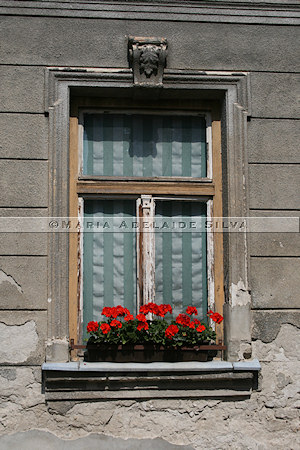
Varaždin · janela · window

Varaždin · Teatro Nacional da Croácia · Croatian National Theater

Varaždin · varanda · balcony

Varaždin · frente da catedral · cathedral front

Varaždin · fundos da catedral · back of the cathedral
A catedral estava fechada, mas parece ser linda por dentro. Nos fundos ficam a torre e um relógio de sol.
The cathedral was closed, but it seems to be forgeous inside. In the back there is a tower and a sundial.
Split
Fotos que tirei em Split, na Croácia.
Photos I took in Split, Croatia.

Split - fachada - façade

Split - fachada - façade

Split - fachada - façade
Split é uma cidade na Croácia com uma característica muito pitoresca: seu centro histórico se desenvolveu sobre as estruturas do antigo palácio do imperador Diocleciano, construído no século IV. Os edifícios atuais, na sua maioria da Idade Média e do Renascimento, aproveitavam elementos originais do palácio, como as colunas e nichos. A catedral foi construída sobre o mausoléu de Diocleciano, em formato octogonal.
Split is a city in Croatia with a very pitouresque characteristic: its historical center developed over the structures of an ancient palace of Roman emperor Diocletian, built in the 4th century. The present buldings, most of them from the Middle Ages and Renaissance, used original elements of the palace, such as columns and niches. The cathedral was built over Diocletian’s mausoleum, in an octogonal shape.

Split - Torre e arcos da catedral - Cathedral's tower and arches

Split - Catedral de São Domnius - Cathedral of St. Domnius

Split - detalhe da cathedral - detail of the cathedral

Split - palácio gótico - gothic palace

Split - janelas - windows

Split - Batistério - Baptistery
The Baptistery of St. John is the former Jupiter Temple. The ceiling is beautifully decorated.

Split - teto ornamentado - ornate ceiling

Split - dança folclórica - folk dance

Split - dança folclórica - folk dance
Incidentally, there was a show of folk dances in a square, presented by a group of young people who took turns in various costumes.

Split - dança folclórica - folk dance

Split - Prefeitura - Town Hall

Split - Catedral à noite - Cathedral by night

Split - Riva à noite - Riva by night