

São João del Rei
| São João del Rei, in the state of Minas Gerais, was a crossroads at the end of the 17th century, though it was in the following century that the city prospered and took part in important events in Brazil's history. Progress brought many changes to the city, but a good portion of its colonial architecture was preserved, like the barroque churches and some houses. | |||||||||
| The imposing Church of São Francisco de Assis, constructed of stone in 1774, is considered one of the country's most important barroque churches. At the time of its construction, the gold mining was already in decline and the church did not receive the gold that had been expected to decorate its altars of carved cedar. The gypsum layer over which the gold would have been applied was removed some years ago, enhancing the beauty of the woodwork by many artists. |
|
||||||||
|
|
||||||||
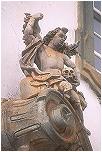
| Below are some details of the beautiful façade, attributed to Antonio Francisco Lisboa, nicknamed Aleijadinho, to whom is also attributed the original design of the church, later modified by the Portuguese master Francisco de Lima Cerqueira, who was in charge of the construction until his death in 1808. | |||||||||
|
|||||||||
|
The Cathedral of Our Lady of Pilar dates from the beginning of the 18th century and for the decorations of its altars 380kg of gold were used. The nave's ceiling is painted with religious scenes. |
||||||||
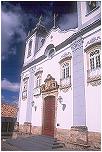
| The Church of Our Lady of Carmo was built between 1734 and 1824 and its façade is by Francisco de Lima Cerqueira. In its interior, white prevails, as, unlike the Church of São Francisco de Assis, gypsum was not removed from the carvings. |
|
||||||||
|
The gorgeous manor of the Baroness of Itaverava, with 40 rooms, is from the 18th century and today houses a cultural center. |
||||||||
| Santo Antônio Street is the best preserved in the city, having been registered as a National Historical Heritage site, together with over 700 places in the city, among streets, squares, churches, houses, etc. |
|
||||||||
|
The manor of the Neves, residence of the family of the former president Tancredo Neves, is one of the most beautiful houses in São João. Elsewhere there is the Tancredo Neves Memorial, a well-designed museum of his life. | ||||||||
| Some examples of old houses' windows. Below, the house that is considered the oldest in São João del Rei, and presumed to have belonged to Tomé Fortes del Rei, the city founder. |
|
||||||||
|
The Chapel of Our Lady of Piety, from 1741, in front of the Museum of Sacred Art, a former jail. |
||||||||
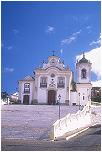
| The Church of Our Lady of the Rosary was built between 1751 and 1753, on the site of a chapel from 1719. The towers were added in 1936. It was attended only by slaves, who had built it at night. |
|
||||||||
|
The Church of Our Lady of Mercies is another of the churches and chapels of the city. Some say it was built on top of a gold mine, to prevent its future exploitation. The present church is from the 19th century, substituting a previous chapel that was built in 1751. | ||||||||
| The Maria Fumaça, a steam train, still takes tourists to Tiradentes, making it the oldest passanger train still in operation in Brazil. This is the last stretch in operation from the Estrada de Ferro Oeste de Minas (West Minas Railroad), inaugurated in 1881 by Emperor Dom Pedro II. This is the only railroad in the world with 76cm gauge tracks. There is a musem in the station. |
|
||||||||
| I stayed at Beco do Bispo Inn, close to the Church of São Francisco de Assis. It is very comfortable and the staff are A+. Breakfast is delicious, everything is fresh and savoury - there is even hot fresh-baked cheesebread! | |||||||||





São João del Rei, from my Page of the Month
São João del Rei, by Brazilian Historical Towns
São João del Rei, by Minas in the World
São João del Rei On Line, by Henrique Cintra e Marcelo Lima (in Portuguese)
São João del Rei - Guia Virtual, by Helbert Ramalho and Lisiane Ferreira (in Portuguese)
CNN.com Weather - São João del Rei
Copyright © Maria Adelaide Silva
No reproduction is allowed without the author's agreement